
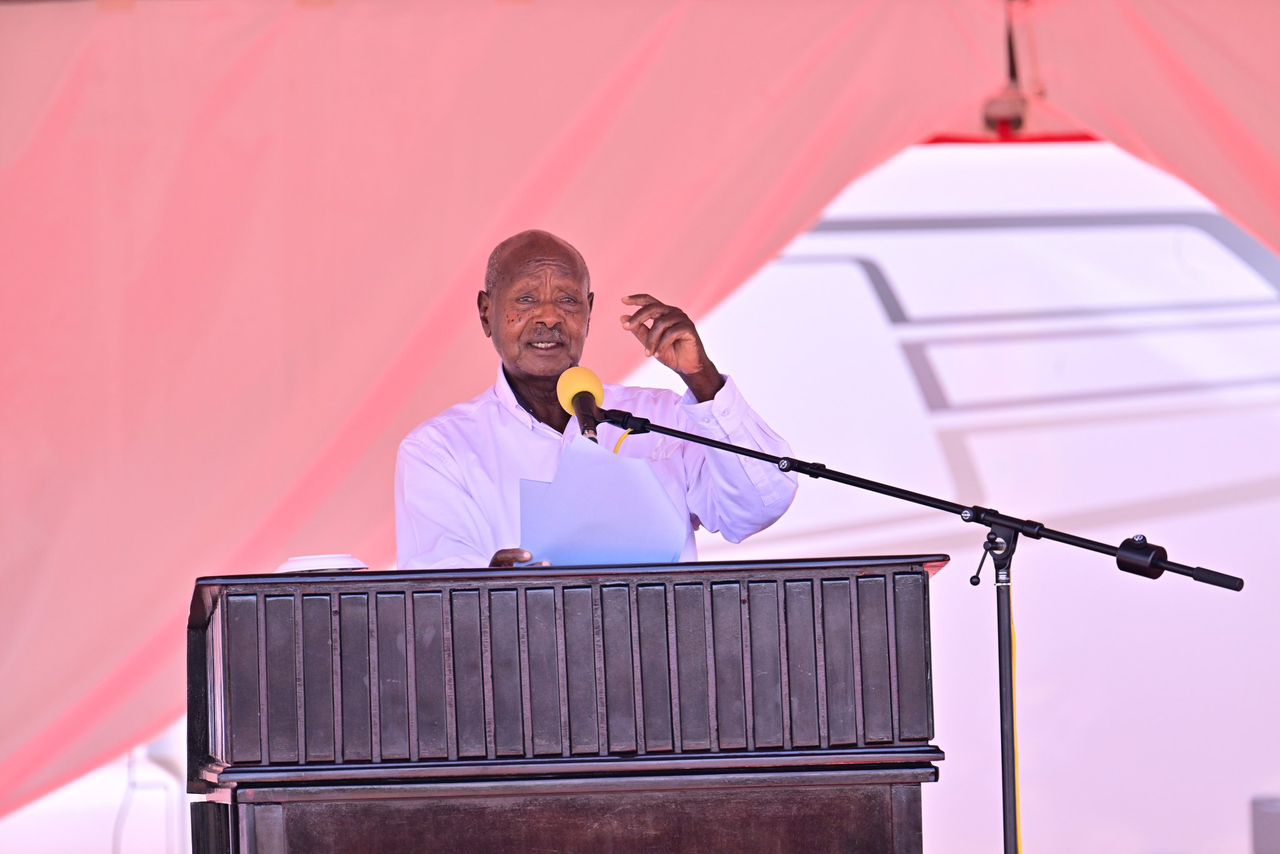
President Museveni has launched what he described as a new era of strict accountability in government, warning ministers, Members of Parliament and civil servants that his administration will no longer tolerate corruption, complacency or poor performance.
Speaking during his State of the Nation Address at Kololo Ceremonial Grounds on Thursday, Museveni set a combative tone for the newly inaugurated Twelfth Parliament, declaring that the next five years would be defined by discipline, supervision and relentless implementation of government programmes.
"There will be no more sleep, no corruption, no kuguumaza, no diverting from our target and no over-burdening us," Museveni said. "There will be no more politeness to non-performers."
The President's remarks amounted to one of his strongest public warnings to government officials in recent years and came as a new Cabinet prepares to assume office following the 2026 General Election.
Museveni began his address by thanking Ugandans for backing the ruling National Resistance Movement (NRM) in the election, while claiming that forces both inside and outside the country had sought to undermine stability.
"I appreciate the massive support to the NRM," he said. "We thank God for peace and the security of so many evil people who wanted to destabilise Uganda."
However, the speech quickly moved from celebration to a stern assessment of shortcomings within government institutions.
The President singled out infrastructure management as an area where public officials had repeatedly failed to meet expectations.
Drawing on what he said were personal observations from his travels around the country, Museveni criticised the poor maintenance of roads and the tendency by officials to blame funding shortages rather than seek solutions.
"The new ministers should make sure I don't see the stories I have seen on the Fort Portal road," he said. "Roads must be maintained. If the money is not enough, why don't you bring up the matter? No more sleep."
The comments appeared directed at both current technocrats and the incoming political leadership that will oversee government ministries during the new parliamentary term.
Museveni also challenged legislators to move beyond debating policies in Kampala and instead monitor implementation of government programmes at grassroots level.
He said leaders must become directly involved in ensuring that services and development initiatives reach communities, warning that failure to do so would attract sanctions.
"All leaders must ensure programmes are downloaded in the next five years," he said. "Leaders should go up to the parish levels and make sure they do their work. If they don't, we shall sack them."
The President reserved some of his sharpest criticism for what he described as a growing culture of entitlement among public officials who demand allowances and facilitation before carrying out routine supervision duties.
"When I see government officials wanting allowances, I feel like vomiting," Museveni said. "Why should they? Why should we have fuel for the Gombolola? They should be given bicycles."
In remarks that drew laughter from sections of the audience, he added: "This is the time to talk straight. He will live longer when he rides a bicycle."
The comments reflect a long-standing position by Museveni that government officials should spend less on administrative costs and focus more resources on service delivery and wealth creation programmes.
On the economy, the President painted an optimistic picture of Uganda's future, citing a 6.4 percent growth rate achieved before the start of commercial oil production.
He argued that the country is entering a new phase of economic expansion that could accelerate once oil revenues begin flowing and industrialisation efforts deepen.
Museveni said the government's broader objective remains transforming households from subsistence living into active participants in the money economy, a theme that has featured prominently in his recent speeches.
The President also used the address to signal a busy legislative agenda for the new Parliament.
He revealed that the Executive plans to introduce 38 Bills during the coming session, including a proposed Light Weapons Control Bill aimed at strengthening internal security and regulating access to firearms.
The announcement indicates that security, governance reforms and economic management will remain central priorities for the administration as it begins a fresh political term.
By the end of the address, Museveni had delivered a clear message to both elected leaders and public servants: the next five years will be judged not by promises or plans, but by measurable results.
For a President entering another term in office after four decades in power, the recurring phrase "no more sleep" served as both a warning and a declaration that he expects a faster pace of implementation from a government increasingly under pressure to demonstrate tangible outcomes to Ugandans.
